

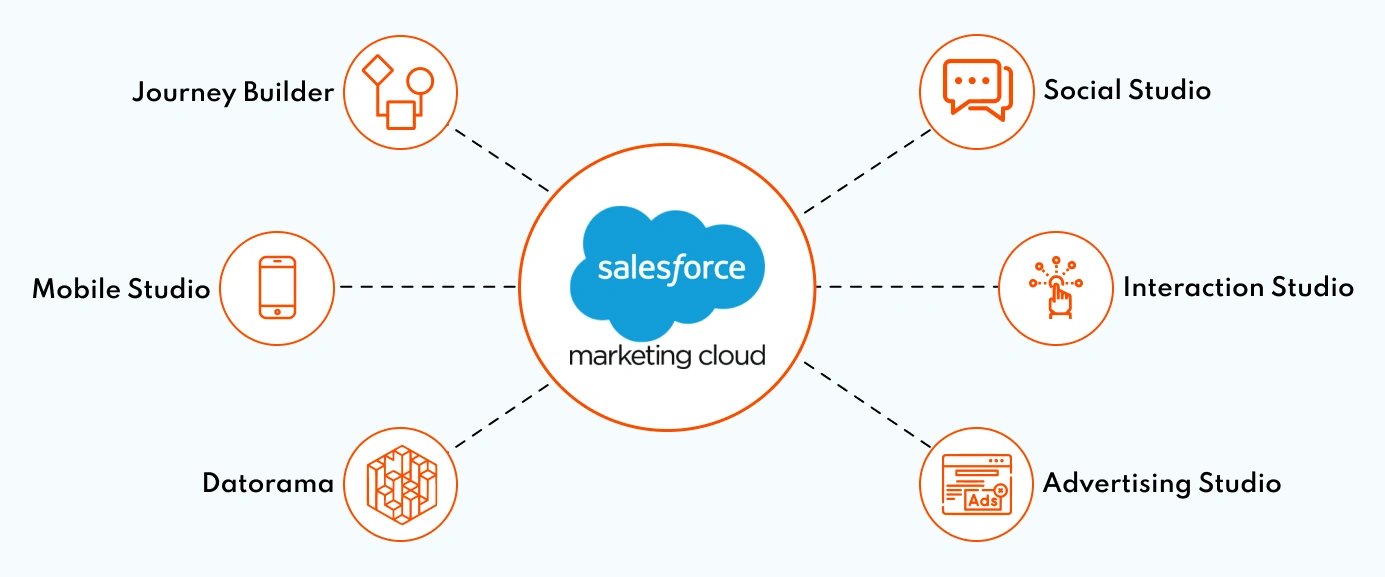
Salesforce Marketing Cloud is one of the most powerful enterprise marketing platforms on the market. It can orchestrate omnichannel customer journeys, automate complex email campaigns, deliver real-time personalization, and surface rich behavioural analytics. So why do so many companies feel like they are getting almost nothing out of it?
The answer, almost universally, is not the platform. It is what happens after the implementation project closes. The consulting team hands over the keys, the internal marketing staff inherits a system they did not build, and the gap between what SFMC can do and what the team actually uses it for widens every month.
The 5 Root Causes of Poor SFMC ROI
- No post-go-live roadmap. Implementation projects end at deployment. Without a structured optimization roadmap, teams default to the 20% of features they already understand.
- Skills attrition. The one person who attended SFMC training leaves within 12 months. Institutional knowledge walks out the door with them.
- Data quality debt. Dirty contact lists, broken data extensions, and misaligned subscriber keys silently degrade deliverability and personalization accuracy.
- Journey Builder neglect. Most teams send batch-and-blast emails when they could be running sophisticated lifecycle journeys triggered by real customer behaviour.
- No governance framework. Without naming conventions, folder structures, and release processes, the account becomes unmaintainable within 18 months.
What Managed Services Actually Changes
A managed services partner does not just keep the lights on. The right partner embeds into your marketing operations rhythm — attending planning sprints, building campaigns alongside your team, and proactively identifying platform capabilities you have not yet unlocked. Think of it as having a senior SFMC architect and a marketing automation specialist permanently allocated to your account, without the overhead of full-time headcount.
At Cirro Consulting, we structure managed engagements around three layers: stable operations (zero downtime, data hygiene, security), continuous optimization (A/B testing, journey refinement, deliverability tuning), and strategic expansion (new channels, new automation use cases, integration deepening). Every quarter, you should be activating new capability — not just maintaining what already exists.
How to Audit Your Current SFMC Maturity
Before investing in managed services, it helps to understand where you currently sit on the SFMC maturity curve. Evaluate five dimensions: data architecture (are your data extensions structured for scale?), journey complexity (are you running multi-step behavioural journeys or just one-off sends?), personalization depth (are you using AMPscript or SSJS for dynamic content?), analytics activation (are you reading Performance Reports or just checking open rates?), and governance health (do you have documented naming conventions and a change management process?).
Most companies score strong on basic email but thin on everything else. That gap is exactly where a structured managed services engagement delivers the fastest returns.
Conclusion
Buying Salesforce Marketing Cloud is the easy part. Turning it into a compounding growth asset requires ongoing expertise, disciplined operations, and a partner who stays accountable to your business outcomes — not just your ticket queue. If your SFMC investment feels stuck, the problem is not the platform. It is the operating model around it.